A national reality
117,000domestic workers estimated in Benin
RNTTD estimate · June 2026

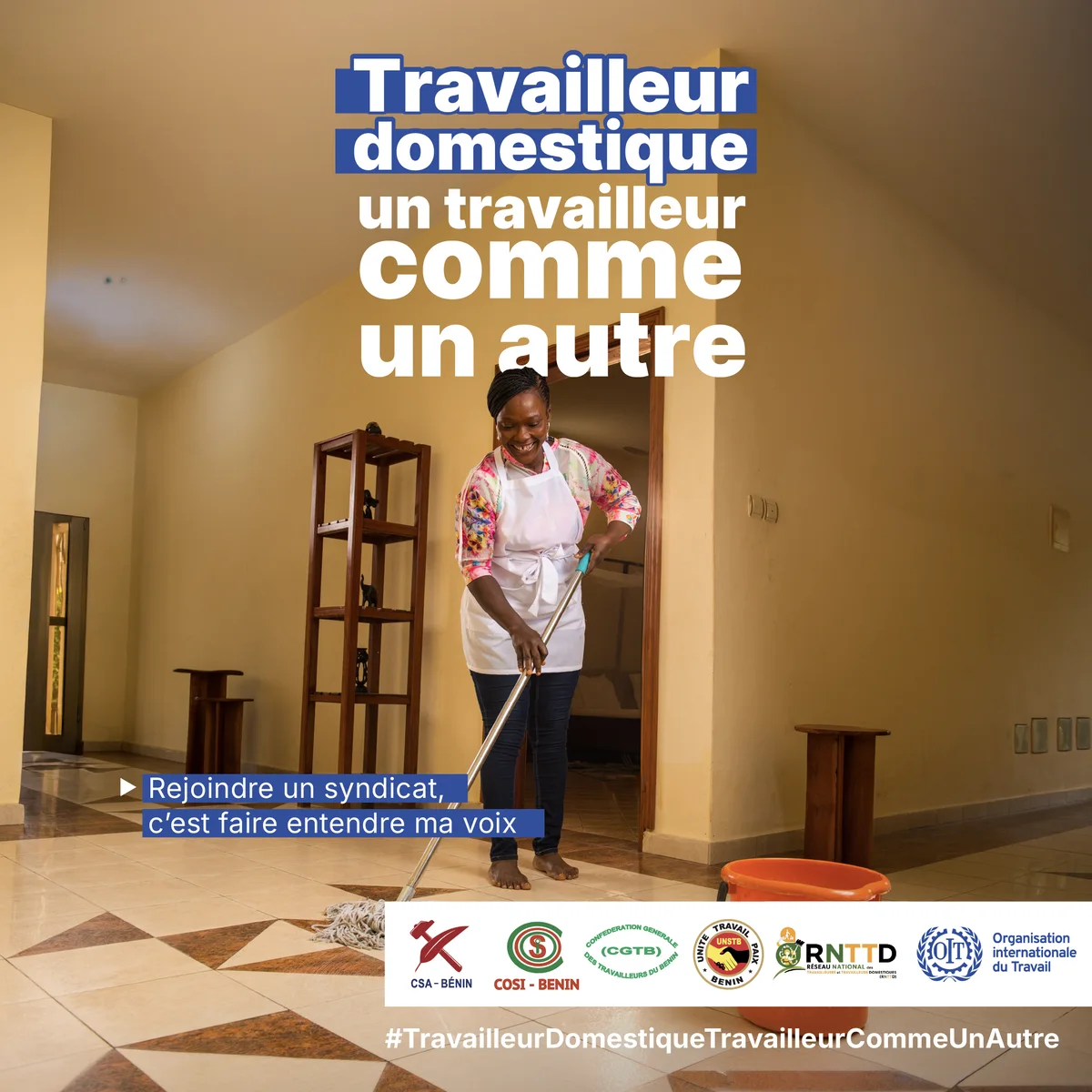
Domestic worker, a worker like any other
Domestic work keeps households running. Convention 189 provides clear guidance to protect workers, give employing families greater security and support public policy.

A collective campaign





The C189 campaign
A collective campaign led by workers' organizations in Benin, with support from the International Labour Organization.
Information: 01 53 03 32 98Key figures
An essential sector that remains largely informal.
A national reality
117,000RNTTD estimate · June 2026
Sector overview
98.4%ILO · TRADOM 2025
Women's employment
2.3%ILO · TRADOM 2025
Before and after Convention 189
The Convention does not turn household life into paperwork. It sets shared reference points for a simpler, safer and more peaceful working relationship.

Today
Working conditions may remain verbal.
With C189
Clear and understandable terms, preferably in writing.
Today
Hours and availability may lack clear limits.
With C189
Working time, standby periods and weekly rest are better regulated.
Today
Payment practices may vary.
With C189
Direct, regular payment in line with the applicable minimum.
Today
Protection and remedies may be difficult to access.
With C189
Health, safety, social protection and complaint mechanisms are recognized.
Convention 189
Convention 189 is the ILO treaty dedicated to domestic work. Ratification means that the State formally commits to applying its obligations and reporting on progress.
Tasks, hours, pay and leave are explained clearly, preferably in writing.
Hours are regulated and at least 24 consecutive hours of weekly rest are guaranteed.
Payment is direct, regular and respects the minimum wage where applicable.
A safe working environment and social protection, including maternity, are pursued.
Protection from abuse, harassment and violence, with accessible remedies.
Freedom of association and collective bargaining are fully recognized.
For workers
Clear rights, protected rest and more accessible remedies.
For employers
Clear responsibilities and a more stable working relationship.
For Benin
Greater formalization and stronger social policy.

Three perspectives, one relationship
Recognition advances when workers, families and organizations can express their realities with respect.
“When tasks and hours are clear, I can organize my work and family life better.”
“A simple agreement protects the family too. Everyone knows what to do and the relationship is more peaceful.”
“Recognition begins with listening, known rights and the freedom to organize.”

Dialogue in Benin
Benin has not yet ratified Convention 189. Legal analysis, tripartite work and public information have nevertheless moved the process forward.
The Government reports a review of national law against the Convention.
A tripartite working group brings together public authorities, workers and employers.
Partner organizations bring information to the public.
No public parliamentary timetable has been announced to date.
Last updated: August 2026
A collective campaign
The organizations behind the campaign.
Confederation of Independent Trade Union Organizations of Benin
Defending workers' rights and interests.
Confederation of Autonomous Trade Unions of Benin
Social dialogue and the promotion of decent work.
General Confederation of Workers of Benin
Representing professional and social interests.
National Union of Workers' Trade Unions of Benin
Trade union organization and representation.
National Network of Domestic Workers
Representing those directly concerned.
International Labour Organization
Supporting social justice and decent work.
Campaign materials
Five professions, one message of recognition. Share or download each official campaign visual.
Frequently asked questions
Simple answers for workers, employing families and citizens.
People who work in or for a household: cleaning, cooking, childcare, personal assistance, gardening, driving or security.
The Convention is an international labour treaty. By ratifying it, the State formally commits to applying its obligations, adapting national law where necessary and reporting to the ILO.
The national review will identify the adjustments required. C189 calls for clear conditions, rest, regular pay, safety, social protection and accessible remedies.
Its first purpose is a clearer relationship that complies with the law. Concrete effects will depend on national measures, while known rules can also reduce disputes and instability.
Benin has not yet ratified the Convention and no public parliamentary timetable has been announced. Tripartite dialogue and the national campaign are preparing the next step.
Preferably set out tasks, hours, rest, pay and leave in writing. If difficulties arise, seek advice from a workers' organization or the appropriate public service.
Share the campaign visuals, explain the rights covered by C189 and encourage respectful working relationships in your community.
The campaign continues with you
Talking about domestic work already helps advance its recognition.